


November 17
Botanical medicine, also known as herbal medicine, is the science and practice of using medicinal plants and extracts to improve overall health, support wellness, and treat both acute and chronic diseases.
We have practiced botanical medicine based on Traditional Chinese Medicine for over 35 years, achieving many successful outcomes in our clinic. Herbal supplements can be adapted to treat challenging infertility conditions such as POI, POF, PCOS, endometriosis, and recurrent pregnancy loss. Combining herbal medicine with an IVF support plan has proven to be highly effective.
1. Antral Follicles Counts (AFC)
Antral follicles are the most primitive grade 3 follicles that develop in the ovaries and serve as important indicators of female ovarian function.
Using vaginal ultrasound or color Doppler ultrasound, doctors can count the number of antral follicles to evaluate a woman’s ovarian function and reproductive potential.
The number of antral follicles is closely related to IVF success. A higher antral follicle count generally leads to more mature follicles after ovulation stimulation, increasing the likelihood of obtaining viable eggs during retrieval. More available eggs allow for more embryos to be used for transfer, improving the chances of a successful pregnancy.
Antral follicles are therefore critical to IVF outcomes. Data from our clinic indicate that botanical medicine can significantly increase antral follicle numbers.
In our analysis, 43 patients with antral follicle count (AFC) data before and after treatment were included. The patients were aged 30 to 43 years, with a median age of 39.
We compared AFC before and after three months of herbal treatment. As shown in Figure 1, there was a significant upward trend in AFC following treatment.
These results suggest that herbal supplements may increase the number of antral follicles by inhibiting the apoptotic pathway of eggs, thereby improving female reproductive capacity and potentially enhancing IVF success rates.
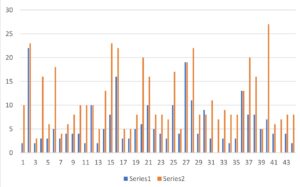
Figure 1: The AFC comparison before and after herbal treatment in 43 cases
2. Anti-Mullerian Hormone (AMH)
Anti-Müllerian Hormone (AMH) is a glycoprotein secreted by granulosa cells in ovarian follicles. The more ovarian follicles present, the higher the serum concentration of AMH.
An increase in AMH reflects not only enhanced function of the follicular granulosa cells but also an increase in the number of antral follicles.
Granulosa cells provide nutrients for oocyte development and serve as the site where androgens are aromatized to produce estrogen. Therefore, an improvement in AMH suggests enhanced egg quality and better ovarian axis function.
For this reason, reproductive doctors often use AMH as an indicator of ovarian reserve, which can help predict female fertility and the likelihood of IVF success.
We collected clinical data from 14 patients and compared their AMH levels before and after treatment. The patients were aged 32 to 41 years, with a median age of 37.5 years.
The results in Figure 2 showed that AMH had a significant upward trend after treatment.
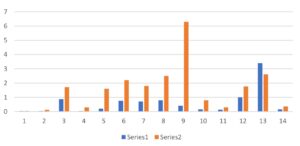
Figure 2: The AMH comparison before and after herbal treatment in 14 cases
3. Third Day Embryo Counts
After egg retrieval and fertilization using IVF technology, the embryonic development is as follows:
Day 1: Sperm and egg are combined and fertilized, and two pronuclei appear;
Day 2: Embryo develops to 4 cells;
Day 3: Embryo develops to 8 cells;
Day 4: Embryo development to morula stage;
Days 5 and 6: Embryo development to the blastocyst stage.
We collected the three-day embryo counts of 16 patients before and after treatment. The patients were between 30 and 43 years old, and the median age was 37 years.
The results showed that the number of three-day embryos obtained by the patients increased significantly after treatment with the herbal supplements.
The results in Figure 3 suggest that the patients have noticed a significant improvement in egg quality after taking the herbal supplement—especially the enhancement of the mitochondrial function of the eggs, so as to provide enough energy to promote embryonic development.
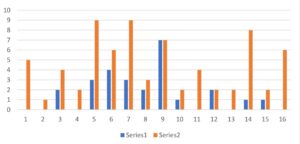
Figure 3: The Third Day Embryo Counts comparison before and after herbal treatment in 16 cases
4. Blastocyst
Compared with a day-3 embryo, a day-5 blastocyst is a more fully developed embryo. Generally, the implantation rate for day-3 embryos is 20–30%, while the implantation rate for day-5 blastocysts is 40–50%. Therefore, an increase in the number of blastocysts is a critical factor in IVF success.
A total of 17 patients had blastocyst count data before and after treatment. The patients were between 33 and 46 years old, with a median age of 38 years.
The results shown in Figure 4 indicate a significant upward trend in blastocyst numbers after herbal treatment. This further suggests that the botanical medicine may help block egg apoptosis and improve mitochondrial function.
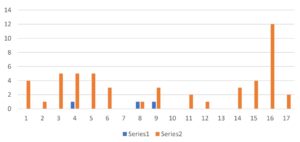
Figure 4: The Fifth Day Blastocyst Counts comparison before and after herbal treatment in 17 cases
5. Euploid Blastocysts (Uploid)
Preimplantation genetic screening (PGS) involves analyzing the 23 pairs of chromosomes in embryos through a biopsy of embryonic cells during IVF treatment, before the embryos are transferred into the uterus.
If a blastocyst has the correct number of chromosomes, it is called a euploid blastocyst.
As women age, egg quality gradually declines, and the rate of aneuploidy in embryos increases. Non-euploidy is a major cause of embryo implantation failure, spontaneous abortion, and congenital malformations. It is also a key factor in IVF failure and a leading cause of early miscarriage in older women.
To further evaluate the effect of botanical medicine on egg quality, we collected data on changes in the number of euploid blastocysts before and after herbal treatment in 14 patients. The patients were between 32 and 42 years old, with a median age of 38.5 years.
As shown in Figure 5, most patients were unable to obtain euploid blastocysts before treatment, which led to complete IVF failure. After treatment, however, 11 patients obtained euploid blastocysts. One patient achieved 12 euploid blastocysts following herbal supplementation.
These results further suggest that, in addition to inhibiting egg apoptosis and promoting mitochondrial function, the prescription may also protect egg DNA from damage and help prevent gene mutations.
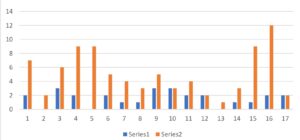
Figure 5: The Euploid Blastocysts (uploid) counts comparison before and after herbal treatment in 17 cases
